
There is no place for judgement about individuals’ chosen healing paths. The key is to understand the implicit right to make those decisions on their own terms, and in their own best interests.
~Nancy’s Sunshine
There are many healing modalities that people can pursue for their own wellness journeys. There is no place for judgement about individuals’ chosen healing paths. The key is to understand the implicit right to make those decisions on their own terms, and in their own best interests. Some will choose the ways of modern medicine with its focus on tests, technology, surgeries, and pharmaceutical agents, and that will be the right choice for those who do. Others will adopt a balanced skepticism for what is offered by medicine, opting to use what makes sense and has a solid record of effectiveness but letting go of procedures and drugs that cause more adverse effects than positive results. And then you will encounter a subset of people who by philosophy, personal experience, circumstances, or tradition are not interested in what doctors and hospitals have to offer. Folks in this last category are often the one’s whose chronic health conditions have reached the limit of what doctors can provide; others come from family and cultural traditions that include methods that are not part of the scientific approach, but they know that they felt better after trying them. Still others are caught unwittingly in structural complications brought on by the mass-production of healthcare and a health insurance industry that creates barriers to access.
Mom’s road to naturopathic medicine began in the 1970s when she fell ill with a complex of symptoms that did not fit neatly into diagnostic criteria: fatigue, brain fog, abdominal pain, digestive issues, bloating, constipation, food intolerance, nausea and vomiting, inability to maintain weight, disordered eating, headaches, sleep disturbances, infertility, irregular menstruation, inflammation, rashes, temperature sensitivities, and pain. She visited several doctors, including our family physician of many years and multiple specialists to whom she was referred for evaluations. Each doctor found her to be in what they termed, perfect health and suggested that she go home and learn to enjoy the nice life that she had. After several years of physical decline, she learned of a team of doctors running a cutting-edge, environmental medicine clinic in the far corner of our state. She was hospitalized in their care for a whole month when I was fifteen years old, and she underwent a battery of blood tests, imaging studies, and the newly developed practice of allergy patch testing.
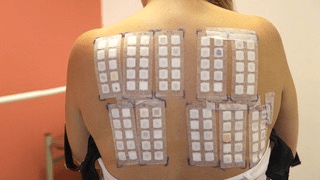
photo credit: https://drsandyskotnicki.com/patch-testing-101-process-determining-skin-allergy-causes/
The results showed that Mom was allergic to almost every substance under the sun from perfumes, food-grade dyes, lawn and gardening chemicals, polyester and acrylic fabrics, certain foods like beef, corn, and wheat, to food additives, medications, formaldehyde, pollen, dust, mold, and yeast. She was found to be in a state of liver failure brought on by years of exposure to industrial and salon chemicals while working in a garment factory and as a beautician; doctors estimated only five percent (5%) liver function at the time of hospitalization. The medical team was kind and concerned with helping her recover, but they were out of ideas for what to do because the typical medications used for liver disease were also allergens on her skin patch tests. They offered an experimental drug in hopes that it would repair her liver and get her through the crisis. Mom and Dad listened to everything that the medical team had to say, and understood that the doctors were outside of their realm of known outcomes. After praying for guidance from above and reading the package insert of the experimental drug, they learned that the most common adverse reaction of that drug was liver damage. With so little remaining liver function to work with, they made the difficult decision to check out of the hospital against medical advice and take their chances at home. Dad carried Mom out of the hospital and made the long drive back with the solemn understanding that they might be bringing her home to die, but would do everything in their power to strip our home of offending substances and change the ways that she cooked, ate, and lived.
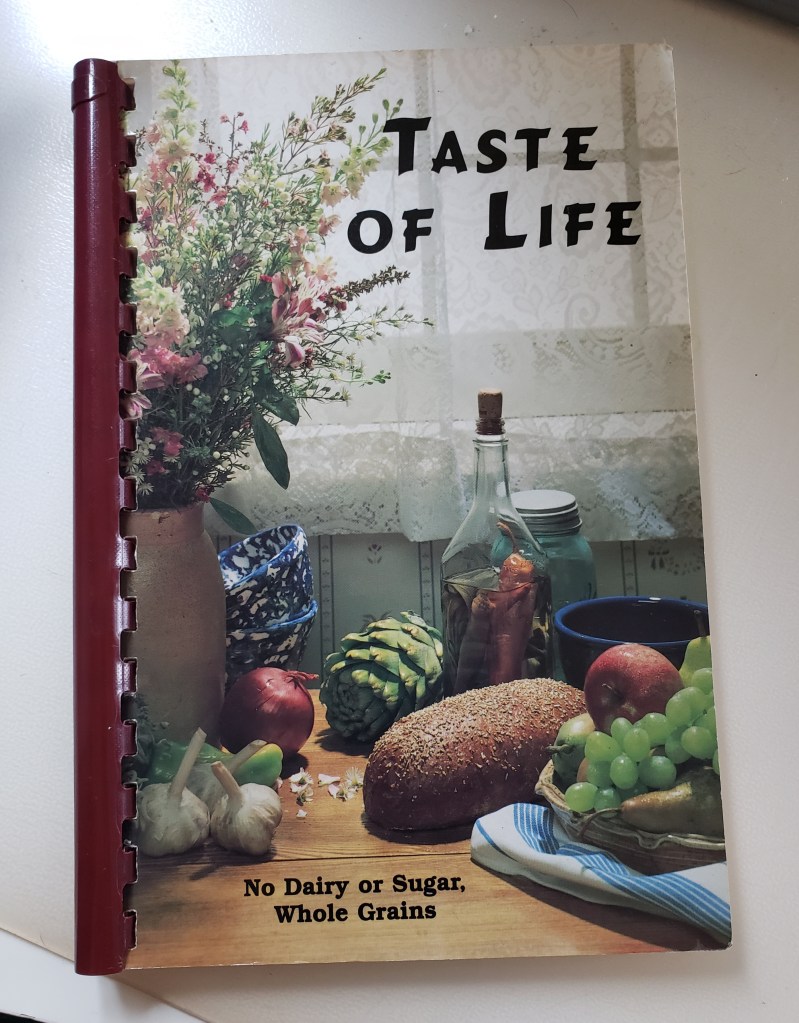
The changes at home led to baby steps of improvement and instead of growing more sickly she was able to slowly develop a day or a few days at a time where she didn’t throw up. Keeping food and water down, even tiny amounts, improved stamina and consistency of practice led to consistency of recovery. She learned from her mistakes too. Sometimes “good days” would turn south through inadvertent contact with hidden substances such as the time that she tried an all-natural, whole grain oat cereal that had trace amounts corn meal from the factory where it was produced and packaged.
Through it all, Mom persevered with the help of Dad and our extended family who found ways to support her, whether by shared harvests of wild game and organically grown vegetables, sewing or searching high and low for 100% cotton garments in a polyester era, or collecting spring water from clean wells. Friends and family learned to use non-scented detergents and avoid all perfumes when visiting and even the folks in our cul-de-sac neighborhood helped out by cutting back on their use of lawn chemicals and avoided smoking cigarettes or using spray paint too close to our house. The community rallied and Mom regained strength, leading to her discovery of new purpose.
In her forties, Mom started a cottage business providing foot reflexology. Clients were instructed in what to wear to prevent activation of her sensitivities when they spent time in our home, and through those instructions, people began learning about ways to reduce their own exposure to toxic chemicals. I believe her gentle approach of simply sharing her journey while caring for others’ feet was a Christ-like healing activity that warmed people’s hearts and created an opening for this new and unusual topic to be considered. Through Mom’s gentle telling of the issues, others began seeking consumer access to “cleaner” products for themselves. As in all endeavors, there is a place for didactic instruction, a place for protest and demands, and a place for gentle persuasion. The 1980s were a time of rising awareness of environmental impacts on health and ecology. Rachel Carson’s Silent Spring was published in 1962 and gained momentum alongside environmental disasters like the Cuyahoga River fire and Santa Barbara oil spill (Wikipedia, 2024a). Earth Day and the Environmental Protection Agency were established and Greenpeace had been making headlines since the early 1970s. But academic approaches and political action do not resonate with all people. Many find those methods divisive and presume hyperbole for ratings or election favors. When an individual feels defensive or manipulated by topics like these, many will shut down or dig in their heels to oppose whatever feels polarizing or existentially threatening (Waldroff, 2021). The wisdom of a tiny, frail woman from a suburban, midwest village went a long way towards breaking down barriers and opening doors of understanding about the ways that toxic products were impacting real people.
By the 1990s Erin Brockovich had built her case against Pacific Gas & Electric regarding groundwater contamination in a California community (Wikipedia, 2024b), and in the early 2000s Al Gore published multiple treatises on environmentalism and sustainability, including the book and film, An Inconvenient Truth: The Planetary Emergency of Global Warming and What We Can Do About It. It was also possible to buy 100% natural fiber clothing for adults and children in many retail establishments, to find household cleaning supplies and grooming products without perfumes or dyes, and to obtain organically-grown fruits and vegetables, including a new baby food brand called Earth’s Best that contained 100% organic fruit and vegetable purees without added sugar, salt, or fillers.
I credit Mom’s simple, loving approach as being a vital part of the movement that brought us to where we are now, in the new millennium, when organically grown, food is readily available in all stores and notably that whole big-box companies now exist with their entire business models resting on organic, natural goods.
In her time as a reflexologist, Mom kept a unique record of her service in the basement safe. Upon her passing, I found the records indicating that she had provided over 5000 hours of reflexology to her friends and clients, even though it was just during the five or ten hours per week that she was feeling strong and healthy enough to do so. It comes down to about five sessions per week over twenty years, and somewhere around a thousand different clients. I see Mom’s life as a true example of the adage, “one person can make a difference.” In the course of her life, she gently reached the hearts and minds of many who would never have considered environmental impacts without their monthly foot massages.
In her lifetime, Mom never returned to contemporary medicine. Occasionally she’d hear of a doctor with a good reputation, and would try meeting with them, but ultimately, she found their drug- and surgery-heavy methods incompatible with what she learned about her own health needs outside of the medical realm. There was one health emergency in her remaining years where surgery was necessary, and she navigated it with a hybrid approach, using her plant medicines and energy techniques instead of opioids to reduce inflammation and ease pain. Even when it came to her final months, she had a concierge doctor (MD- primary care) pay a few house calls to confirm that she was, indeed, approaching the end of her life. In between the initial health crisis in the 1970s and her final breath in 2023, Mom abided by the beliefs and methods she discovered on her own when medicine couldn’t help her, and she stood as an unwavering advocate for others who were called by conviction or circumstance to become their own best self-care advocates when they interface with or step outside mainstream medical systems. I am grateful for her teachings and the impact it’s had on my own life as well as our community, who have grown and embraced different concepts around caring for our planet and selves.
References
Waldroff, K., (2021, January 1). Healing the Political Divide: How did we become such a divided nation, and how can psychologists help us bridge the gap? [Blog post]. American Psychological Association. Accessed on February 3, 2024 from https://www.apa.org/monitor/2021/01/healing-political-divide
Wikipedia, (2024a). Environmental Science. Accessed on February 3, 2024 from https://en.m.wikipedia.org/wiki/Environmental_science#:~:text=Environmental%20science%20was%20brought%20to,chemicals%20like%20the%20insecticide%20DDT
Wikipedia, (2024b). Erin Brockovich. Accessed on a February 3, 2024 from https://en.m.wikipedia.org/wiki/Erin_Brockovich


 Nancy's Sunshine, LLC