Mom’s Fridge “Curses” and Her Lasting Lessons on Food Safety


Mom, in her hospice bed, grinned at me with a twinkle in her eye when I joked, “Did you have something to do with that?”  

It’s no exaggeration to say that Mom had strong opinions about food safety—and let’s just say she found creative ways to make her point. Twice, in fact. This story involves two mysteriously doomed refrigerators, Mom’s stubborn (and possibly supernatural) influence, and some lessons about bacteria, mold, and how to keep your fridge clean without triggering chemical or fragrance sensitivities.


The Great Refrigerator Collapse(s) 

Peering into the fridge, pondering: Is it leftovers… or a science experiment waiting to happen?

Before Mom passed away, she tried to impress upon me the importance of the three-day rule: don’t keep leftovers longer than three days, or you risk breeding bacteria that could harm your health and contaminate your fridge. I brushed it off. After all, I’ve been fine eating week-old soup and casseroles my whole adult life! 

“Mom,” I told her, “I haven’t gotten sick yet.”  

She wasn’t impressed. “Yet,” she muttered while widening her eyes for emphasis.  

A few days later, my shiny three-year-old, bottom-freezer fridge—the one I’d laughingly nicknamed the Cadillac—died, out of nowhere. Mom, in her hospice bed, grinned at me with a twinkle in her eye when I joked, “Did you have something to do with that?”  


In the midst of post-COVID supply chain disruptions, I spent over a month fridge-less before finally getting the new one installed. Mom begged me to follow the three-day rule, scrub my brand new fridge frequently, inside and out, and keep bacteria at bay. I promised I’d try.  

But between her passing, sorting through her affairs, and caring for Steven, my companion–who was diagnosed with incurable, metastatic prostate cancer just two months after Mom’s death–I just couldn’t stick to the rules. 

As fate would have it, less than six months later, my new fridge stopped working, too—completely out of the blue. Coincidence? Maybe. But if you’d known Mom and her flair for making her point stick, you might suspect some supernatural meddling was at play! Was it Mom’s shenanigans, or just my bad luck?  

When your guardian angel has opinions about food safety—and possibly a hand in your fridge’s mysterious demise.

Well, shenanigans or not, I looked into it and discovered that Samsung refrigerators rank among the worst for reliability and repairs (Consumer Reports, 2024). Both of my previous units were the same Samsung model, ordered directly from the factory. To make matters worse, the most recent installation wasn’t as professional as I had expected, which could have damaged the cooling system. Mom’s message was about bacteria and food safety, but the fridge failures seemed like her way of underlining the importance of her advice. For the third refrigerator, I decided to play it safe on all fronts: I went with a trusted local dealer and installer, switched to the highly rated LG brand, and have been more diligent about cleaning and tossing older food.  


Food Safety Facts Mom Would Want You to Know  

Let’s talk science because Mom would want you to understand why she was so adamant. Here’s what I’ve learned since my double fridge fiasco:  

The Three-Day Rule  

Leftovers should be eaten or discarded within three to four days, according to the USDA. Harmful bacteria like Listeria monocytogenes can thrive in refrigerators, especially if food is stored too long. Unlike most bacteria, Listeria can grow at temperatures as low as 34°F, meaning even a properly chilled fridge isn’t foolproof.  

Reheating Properly  

Mom was never a fan of microwaves for reheating, and she was onto something. Microwaves often heat unevenly, leaving cold spots where bacteria can survive. Experts recommend reheating leftovers to an internal temperature of 165°F. For consistent results, use a stovetop or oven, which heat more evenly (Tagle & Gharib, 2024).  

Lingering Bacteria and Mold  

Here’s the part Mom tried to hammer home: bacteria and mold can thrive inside fridges. Studies show even clean-looking refrigerators can harbor pathogens like Salmonella, E. coli, and Aspergillus mold spores. These pathogens transfer to new foods through contact, contaminating fresh produce or stored meals (NSF International, 2013). Mold not only causes spoilage but can also trigger allergies and respiratory issues.  

SIBO and Autoimmune Vulnerability  

Mom’s fear of lingering bacteria wasn’t just paranoia—it was informed by her struggles with Small Intestinal Bacterial Overgrowth (SIBO). SIBO occurs when bacteria that should stay in the large intestine migrate to the small intestine, causing bloating, pain, and malnutrition. People with autoimmune conditions, like Mom, are more vulnerable to SIBO, even without heavy antibiotic use (Miele et al., 2009).  

Fridge Cleaning Tips (Non-Toxic and Mom-Approved!)  

Armed and ready: banishing bacteria and mold the non-toxic, fragrance-free way.

I’m finally following Mom’s advice to keep my fridge clean, and here’s how I do it:  

1. Empty It Completely: Once a month, take everything out.  

2. Use Natural Cleaners: Mix equal parts white vinegar and water, or use 3% hydrogen peroxide as a powerful, odorless bacteria killer. (Bonus: hydrogen peroxide also tackles mold.)  

3. Scrub the Shelves: Remove shelves and bins, wash them in warm soapy water, and wipe down interior surfaces with your cleaning solution.  

4. Dry Thoroughly: Mold thrives in moisture, so dry everything before putting it back.  

5. Check Expiration Dates: Toss anything questionable, especially leftovers lingering past the three-day mark.  


A Final Word of Love and Teaching  

Mom might have been laughing at me from the great beyond as I scrambled to replace two refrigerators. But what she really left behind wasn’t a curse—it was wisdom and love. She wanted me to stay healthy, even when I wasn’t ready to listen.  

Mom, I get it now. I’m cleaning my fridge, eating my leftovers or tossing them more quickly, and keeping bacteria and mold at bay. And to anyone reading this: listen to your moms. Sometimes, their last words stick in the most unexpected ways.  


References

Consumer Reports. (2024). Best refrigerators of 2024.  

– NSF International. (2013). Refrigerator food safety: How clean is your kitchen?  

– Miele, L., Valenza, V., La Torre, G., Montalto, M., et al. (2009). Small intestinal bacterial overgrowth in chronic inflammatory bowel diseases. World Journal of Gastroenterology, 15(12), 1424–1427.  

– Tagle, G., & Gharib, M. (2024, November 15). Reheating leftovers the safe way: Tips for avoiding foodborne illnesses. NPR.  

Retro Carpets and Squash Muffins

Yet here’s proof that forty-plus years of homemade meals in this kitchen could be made without so much as a smudge, and that represents the care by which Mom tended her every endeavor.

In addition to her role supporting others who suffered with autoimmune disorders, multiple-chemical sensitivities, allergies, cancer, and other difficult-to-manage health conditions, Mom kept an immaculate home which was necessary to reduce allergens and help her belongings last as long as possible to avoid the need to purchase new items that would go through an off-gassing process. Off-gassing is known to materials experts as a complicated issue involving airborne toxins emanating from building materials, furnishings, cleaning products, car interiors, computers, and other household items (Gray, 2020).

Before Mom became ill in the late 1970s, a salesperson who sold her the iconic, orange and red mosaic carpet that still lines her floors, said that the best way to make the carpet last was to keep it as clean as possible by vacuuming often because dirt particles will otherwise embed in the fibers and wear off the pile. The vacuum-often theory is supported by carpet experts like Mary Warren, who wrote on LinkedIn about how Dirt Damages Carpet Fibers Over Time, and can be seen in the long-lasting quality of Mom’s retro carpets. By the time of her diagnosis in the 1980s, the carpet was off-gassed so keeping it intact presented less of a threat than removing and replacing it with hardwood, which would have caused another off-gassing event. Even her bedroom carpet, which was moved from the living room to avoid adding new products to her sleep space, is in good condition despite being the original floor treatment from 1964 when the house was built. I marvel at the pristine condition of the kitchen in particular because Mom cooked most of her foods from scratch and I know from experience that home-cooking creates all kinds of opportunities for big, sticky messes that do not land well on carpeted floors. Yet here’s proof, that forty-plus years of homemade meals in this kitchen could be made without so much as a smudge, and that represents the care by which Mom tended her every endeavor.

a picture of a kitchen with wooden cabinets and orange, mosaic carpeting

Image credit: nancyssunshine.com

Another way that Mom took special care was in the creation of recipes that were palatable while being attentive to exclude allergens and other aggravating contents. Consuming any allergens, hidden additives, or sugars (and even touching some ingredients) resulted in inflammation of the skin and digestive tract including throat, gut, intestinal, and rectal mucosa. Things that did not cause inflammation itself, upset the yeast balance or triggered a SIBO flare. Small intestinal bacterial overgrowth (SIBO) is defined as excessive bacteria in the small intestine and remains a poorly understood disease. It was initially thought to occur in only a small number of patients, but is more prevalent than previously thought. Patients with SIBO often vary in severity of symptoms but commonly suffer from chronic diarrhea, weight loss, and malabsorption (Dukowicz, et al., 2007).

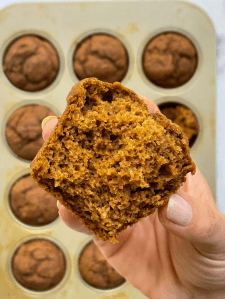
Here is one of my favorite of Mom’s recipes which gave the satisfaction of eating a sweet muffin while remaining safe for her tummy. Mom often used these as a base for sandwiches or toasted them to crumble on top of salads and soups, but she also enjoyed them plain, with organic, grass-fed butter, or with organic goat milk kefir. This picture is not from any of Mom’s batches because she really did not have me or anyone else over to the house very often or to share meals on a regular basis. She was so sensitive to viruses that it was not possible to spend time together even before the Covid-19 pandemic. I pulled this photo from a gluten-free, pumpkin muffin recipe by Kathleen Ashmore who creates healthy recipes that feel good to make and good to eat. While Nancy’s Sunshine is not a recipe blog, sometimes I will share Mom’s recipes to highlight ways that she coped that may have value for other folks with similar health predicaments.

Someone's hand holding a broken open muffin with a pan of muffins in the background.

Image credit: https://kathleenashmore.com/bakery-style-pumpkin-ginger-muffins/

Nancy’s Sunshine SQUASH MUFFINS (in her own words)

3/4 cup water ‐ add 3 tea bags of Mulling spice [R. W. KNUDSEN ORGANIC simmer 5 min., turn off and let steep.
Steam ACORN SQUASH needs 3 cups [or other squash to your liking].
2 ½ cups mixed flours ‐ CASAVA, ALMOND, QUINOA, FAVA [OR ALMOND flour to replace the quinoa or fava]
Spices [Simply Organic]
2 full tsp ALL SPICE
1 tsp GROUND CLOVES
2 tsp GARAM MASALA
1 tsp TURMERIC
1 TBSP VANILLA
1 tsp SALT
3 EGGS
2 TBSP SESAME OIL
2 TBSP AVOCADO OIL
2 TBSP OLIVE OIL
3 droppers SWEET LEAF STEVIA CLEAR
Mix all the dry ingredients and then add all the moist ingredients. The batter may be too thin, and you may need to add more flour. Find the consistency you need for your palate [can be too moist or too dry, but don’t make a thick batter]. Bake at 365° on second to the last bottom shelf for approximately 20 to 25 min. and then top shelf for 5 to 8 min. Watch closely to not over bake or under bake. This is an excellent way to get valuable nutrients from the veggies because each muffin has a nice amount in it.

Hopefully this recipe will find a place in the hearts and homes of others who need to find creative ways to meet their particular dietary needs as well as giving a few ideas for improving the indoor air quality in your homes.

a picture of a person's hand illuminated by a prism of colorful light

References:

Dukowicz, A. C., Lacy, B. E., & Levine, G. M. (2007). Small intestinal bacterial overgrowth: a comprehensive review. Gastroenterology & hepatology, 3(2), 112–122. Retrieved on July 7, 2023 from https://www.ncbi.nlm.nih.gov/pmc/articles/PMC3099351/

Gray, Audrey. (2020, February 12). What you need to know about off-gassing. [web article]. Architectural Digest. Retrieved on July 5, 2023 from https://www.architecturaldigest.com/story/what-is-off-gassing