
Pleasant words are as an honeycomb, sweet to the soul and health to the bones ~Proverbs 16:24
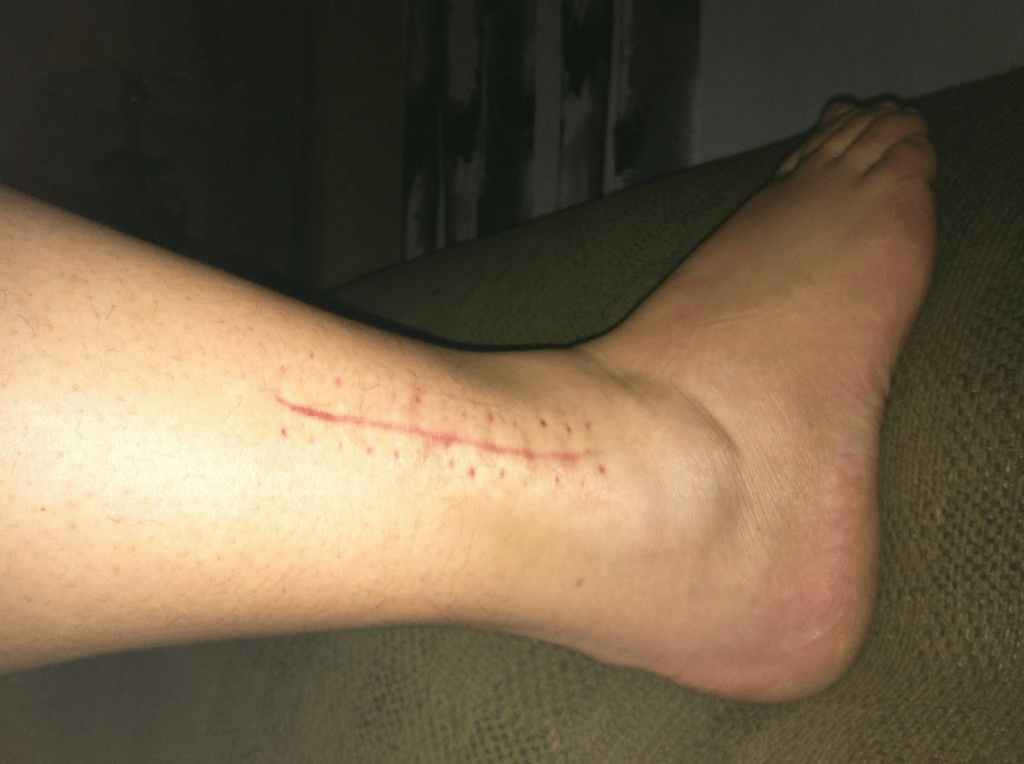
In 2012 I had a bicycling accident that resulted in compound dislocations and fractures of my tibia and fibula requiring an open reduction internal fixation (ORIF) surgery the same day. Fortunately, the injury was not extremely painful, and quality orthopedic care was accessible.
Content Warning: photos of dislocated and fractured limb and post surgical scars.

While sorting through Mom’s papers this week, I came across the program that she wrote up for my recovery. Here is what she recommended, and what I felt to be helpful in healing quickly and completely. I have an acquaintance who is a long-time orthopedic nurse that came to the hospital to see me while I was recovering. She’s one of those people who is always razzing others, and she was sure to point out that I should expect my leg to look like a stump for the rest of my life. But with the help of Mom’s healing recommendations and diligent physio-therapy, the inflammation completely dissipated, bones healed, and definition returned to normal within three months, and I have not had any episodes of pain, swelling, or aches in the area since it healed.
Nutritional Helps
Increase daily calories: inflammatory processes put increased metabolic demand on your body and more nutrients are needed to act as substrates to rebuild tissues. The severity of injury dictates the increased energy needs: “long bone fractures…may increase your basal metabolic rate by 15-20% over the course of several weeks. If your basal metabolic rate is 2,000 calories a day, that’s an extra 300-400 calories…” (Schlag, 2014).
Increase protein: both animal and plant-based proteins are beneficial. Feskanich, et al. (2004) found that consuming fish at least once a week was associated with a 33% reduction in the risk of hip fracture and Papadimitropoulos, et al. (2002) found dietary protein intake to hold an important role in growth, development, and maintenance of bone.
Increase green vegetables: which are high in absorbable calcium and vitamin k1, both of which are known for their roles in bone health and repair (Sim, et al., 2020).
Consume raw local honey: which decreases inflammation, helps form new collagen, reduces swelling, and is clinically proven to promote healing when applied directly to wounds. Additionally, consuming honey increases the absorption of calcium, improves bone density, and provides pain relief (Ooi, et al., 2014, Tashkandi, 2021). Mom’s notes quote Proverbs 16:24 “Pleasant words are as an honeycomb, sweet to the soul and health to the bones.”
Things to Avoid
Avoid alcohol: Some people point to the barley in beer providing silicon to help bone healing, however, consuming two or more alcoholic drinks per day can have a negative impact on bone health by impairing the body’s ability to produce new bone cells known as osteoblasts. Alcohol can delay healing, increase the risk of complications, and interfere with pain medication, making it more difficult to control pain. (Cathy, 2022).
Avoid smoking: Hernigou and Schuind (2019) report that smokers have an increased risk of fracture and experience more complications with delayed bone healing, even if they have already stopped smoking, because some adverse effects persist for a prolonged period.
Avoid pain medications: Coluzzi, et al. (2020) describe negative affects on bone remodeling and bone healing in animals exposed to opioids like morphine and fentanyl. Try to use other methods of pain relief such as alternating ice and heat, reducing inflammatory foods, ointments, relaxing baths, massage, and essential oils of lavender, frankincense, or cbd lotion. If opioids are necessary, keep their use to a minimum and rely on other methods between doses. For myself, my mood was negatively impacted by the post-surgical use of opioids, and I opted to forego them after the third day.
Vitamin Supplements
Chelated calcium and magnesium citrate: this will help with bone healing but also improves problems with teeth, muscle spasms, tendonitis and nervousness. Take three capsules once or twice per day for the first six weeks after injury, then reduce to one per day or a directed on the package.
Increase Vitamins C and D3: in a systematic review of eleven animal studies Barrios-Garay, et al, (2022) report that vitamin C (ascorbic acid) seems to accelerate bone regeneration without adverse events as measured by bone healing time, bone gain (mm) and bone density. 75-90 mg per day is recommended during recovery. Smokers should consume an additional 35 mg per day because of the increased oxidative stresses (Hart, et al. 2015). Aeschlimann (2011) and Gatt, et al. (2022) reported that while vitamin D3 is important for prevention of bone fractures, it does not consistently improve measures of bone healing in humans. The benefit of vitamin D3 supplementation following a fracture lies in prevention of further fractures. A wide variety of doses were used in the study populations including large single doses at the time of fracture, and daily doses between 700 to 1000 IU. None of the dosing methods were more effective for bone healing or growth.
Green Supplements
Barley Juice Powder: contains silica, an important trace mineral that has been shown to affect connective tissue such as collagen and the growth and mineralization of bone (Goldschmidt, n.d.). Two capsules, three times per day or one-two “shots” of fresh juice per day.
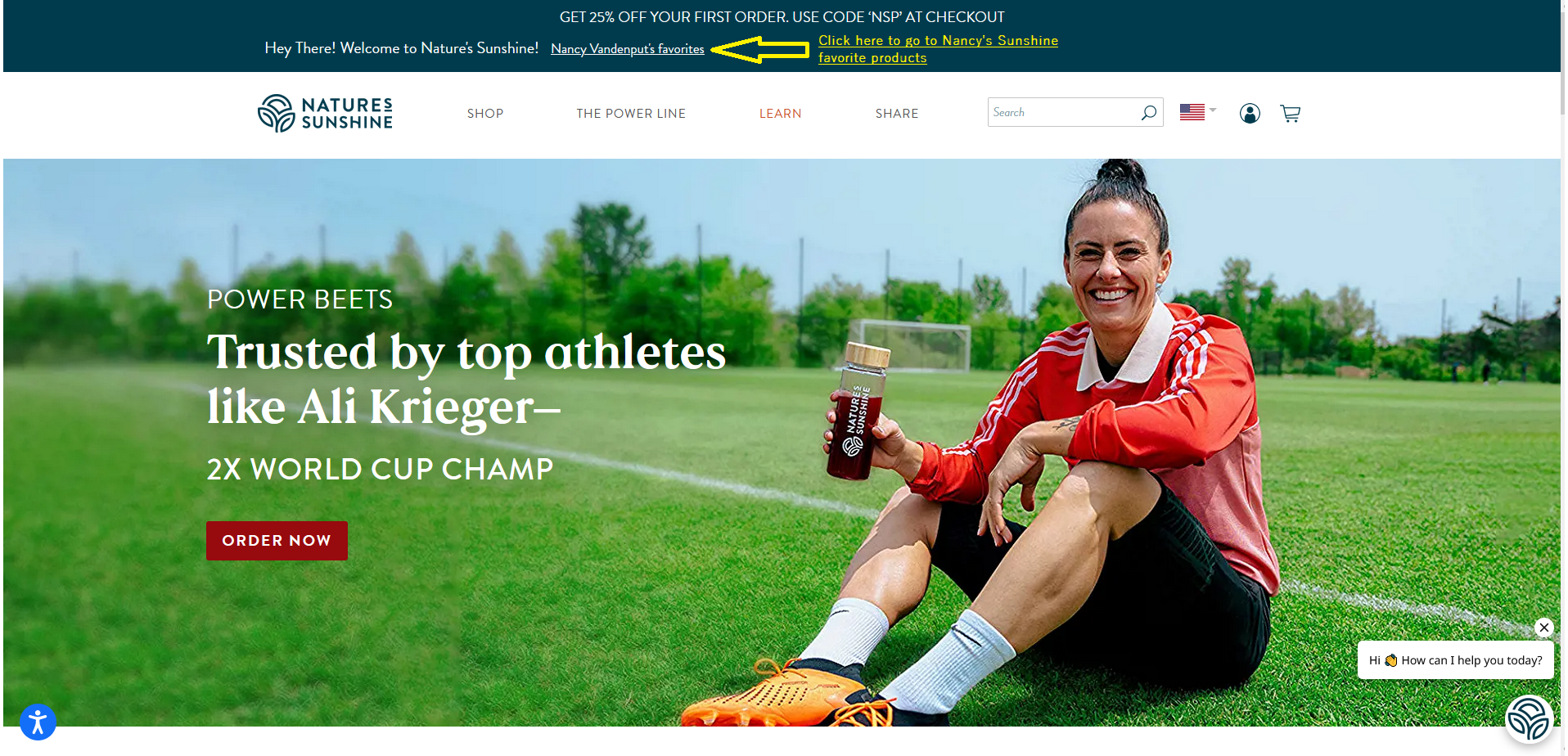
Nature’s Sunshine Products Ultimate GreenZone® Powder: a whole-food blend of grains, greens, and super foods featuring quinoa, amaranth, spirulina, chia, spinach, broccoli, kale, parsley, and horsetail. These super foods contain 25-30 times the calcium of milk per serving. Mix it with juice once a day. (See footnotes for navigational instructions at NSP website.)
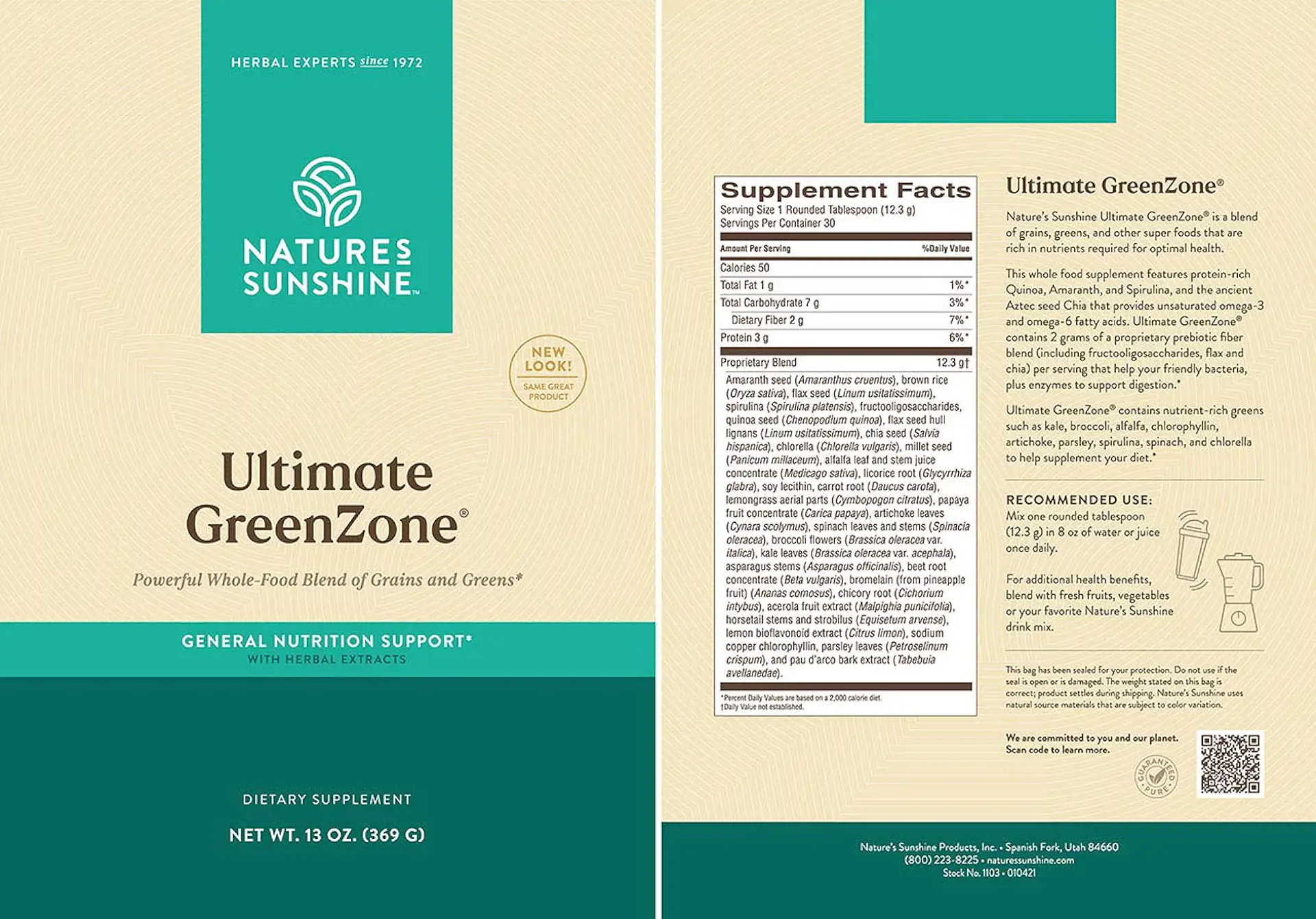
Green supplements can also help with nervousness, hepatitis, and liver problems.
For Pain
Nature’s Sunshine Products Joint Health Ayurvedic Formula: authentic Ayurvedic formula, developed with herbs direct from India, and true to the Ayurvedic philosophy of restoring balance to the body. This formula contains herbs traditionally used to support joints and the structural system. Recommended to take two capsules with meals, three times a day (See footnotes for navigational instructions at NSP website.)

For Nerves and Relaxation
Blue Vervain Liquid Tincture: serves as a gentle help for debility and weakness. Traditionally used as a nervine (nervous system tonic) and is effective at easing bodily nervous tension such as stiffness in the back, shoulders, neck, etc., with a slight sedative effect. Helps the body release pent up energy and relax (Carpenter and Carpenter, 2015). Take a few drops under the tongue once per day.
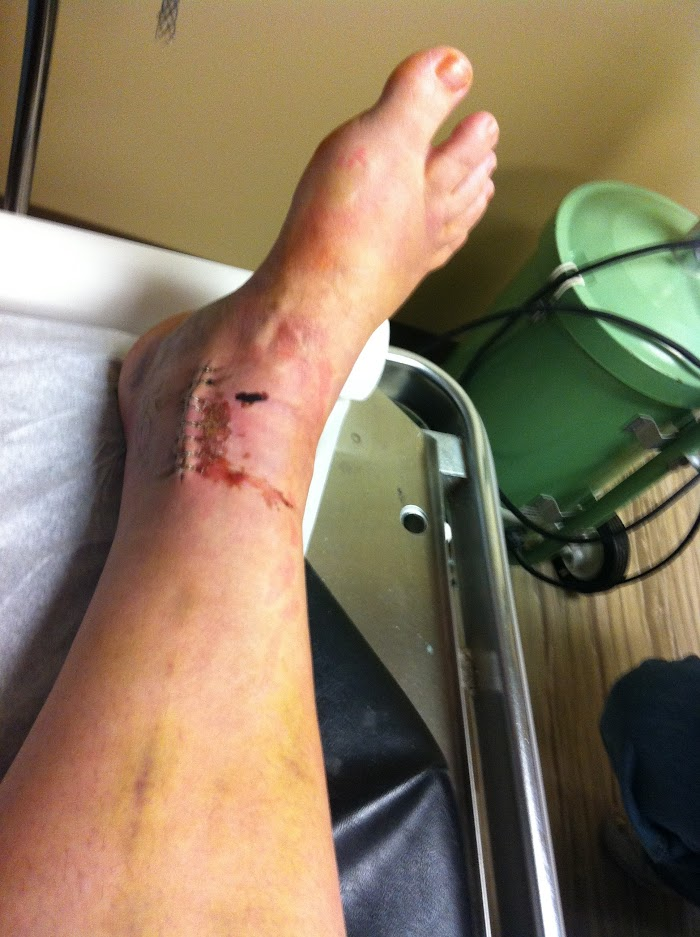
Here are two pictures of my ankle after the cast was removed:

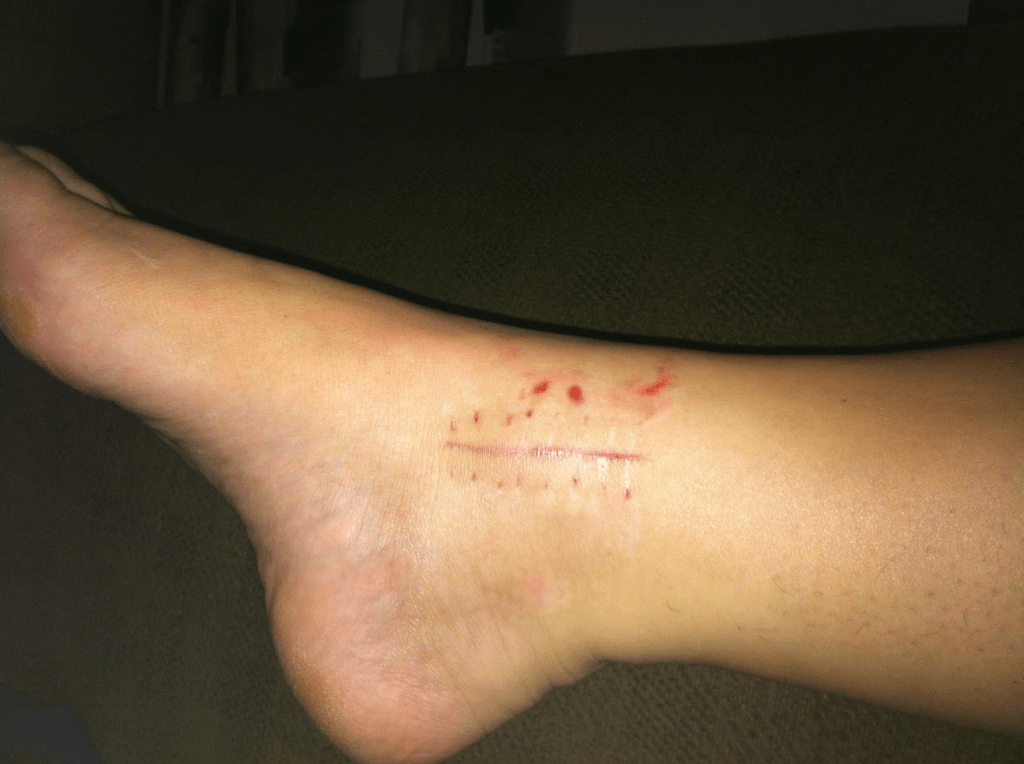
And here it is three months after the cast came off:
One of the best pieces of advice from Mom and a point of pride that she expressed about my healing journey from injury and surgery, was to keep a positive outlook. The timing of this injury could not have been better in regards to my life-status. Stress was lower than it had been at other times, social supports were in place, and I had recently adopted a beautiful Newfoundland puppy from our local shelter, who was such a dear girl to have join our family. Despite the events, I was able to focus on healing with joy and laughter. Mom always said that our hurt and sickly body parts can sense the way that we feel and talk about them. If we continually refer to our “gimp leg”, or that “bad knee”, it becomes a part of who we are and how that body part responds. By keeping our words as pleasant as honey, we encourage the subtle energies around those issues to respond with kindness in return. Instead of complaining about the bone break and surgical recovery, I found ways to talk about it with positivity by saying things like “my ankle is really growing stronger day by day“, or “it hurts at times but I can feel the bones and tissues knitting themselves back together just like they should.”

Footnotes:
After clicking the product links for Nature’s Sunshine Products listed in this post, navigate to the “favorites” link in the banner to find the specific products.
Citations
Barrios-Garay, K., Toledano-Serrabona, J., Gay-Escoda, C., & Sánchez-Garcés, M. Á. (2022). Clinical effect of vitamin C supplementation on bone healing: A systematic review. Medicina oral, patologia oral y cirugia bucal, 27(3), e205–e215. https://doi.org/10.4317/medoral.24944
Carpenter, J. & Carpenter M. (2015). Blue Vervain: Verbena hastata. [web page]. UMASS Dining University of Massachusetts Amherst. Retrieved on July 25, 2023 from https://www.localumass.com/blue-vervain.html#:~:text=Traditional%20used%20medicinally%20as%20a,%2C%20shoulders%2C%20neck%2C%20etc
Cathy. (2022, February 13). The dangers of drinking alcohol while healing a broken bone. [Blog post]. blacktailnyc.com/. Retrieved on July 25, 2023 from https://blacktailnyc.com/can-i-drink-beer-with-a-broken-bone/
Coluzzi, F., Scerpa, M. S., & Centanni, M. (2020). The Effect of Opiates on Bone Formation and Bone Healing. Current osteoporosis reports, 18(3), 325–335. https://doi.org/10.1007/s11914-020-00585-4
Eschle, D., & Aeschlimann, A. G. (2011). Is supplementation of vitamin d beneficial for fracture healing? A short review of the literature. Geriatric orthopaedic surgery & rehabilitation, 2(3), 90–93. https://doi.org/10.1177/2151458511408568
Feskanich D., Willett W., & Colditz G. (2003). Calcium, vitamin D, milk consumption, and hip fractures: A prospective study among postmenopausal women. American Journal of Clinical Nutrition, 77(2):504–511. [PubMed] [Google Scholar] [Ref list]
Gatt, T., Grech, A., & Arshad, A. (2022). The Effect of Vitamin D Supplementation for Bone Healing in Fracture Patients: A Systematic Review. Advances in Orthopedics, Volume 2023 | Article ID 6236045. https://doi.org/10.1155/2023/6236045
Goldschmidt, V. (n.d.). The ancient grain that’s good for your bones [web article]. saveourbones.com/. Retrieved on July 25, 2023 from https://saveourbones.com/the-ancient-grain-thats-good-for-your-bones/
Hart, A., Cota, A., Makhdom, A., & Harvey, E. J. (2015). The Role of Vitamin C in Orthopedic Trauma and Bone Health. American journal of orthopedics (Belle Mead, N.J.), 44(7), 306–311. https://pubmed.ncbi.nlm.nih.gov/26161758/
Hernigou, J., & Schuind, F. (2019). Tobacco and bone fractures: A review of the facts and issues that every orthopaedic surgeon should know. Bone & joint research, 8(6), 255–265. https://doi.org/10.1302/2046-3758.86.BJR-2018-0344.R1
Ooi F. K., Hung L., & He Y. (2014). Tibial bone mineral density, geometry and mechanical properties in response to high impact exercise and honey supplementation in rats. Asian Journal of Exercise and Sports Science, 11(2):11–24. [Google Scholar]
Papadimitropoulos E., Wells G., & Shea B., et al. (2002). VIII: meta-analysis of the efficacy of vitamin D treatment in preventing osteoporosis in postmenopausal women. Endocrine Reviews, 23(4):560–569. doi: 10.1210/er.2001-8002. [PubMed] [CrossRef] [Google Scholar] [Ref list]
Schlag, K. (2014, April 2). Nutrition And Recovering From Injury — Tips from the Research [web article]. Ultiworld.com. Retrieved on July 25, 2023 from https://ultiworld.com/2014/04/02/nutrition-recovering-injury-tips-research/
Sim, M., Lewis, J.R., Prince, R.L., Levinger, I., Brennan-Speranza, T.C., Palmer, C., Bondonno, C.P., Bondonno, N.P., Devine, A., Ward, N.C., Byrnes, E., Schultz, C.J., Woodman, R., Croft, K., Hodgson, J.M., & Blekkenhorst, L.C. (2020). The effects of vitamin K-rich green leafy vegetables on bone metabolism: A 4-week randomised controlled trial in middle-aged and older individuals. Bone Reports, Volume 12, 100274. https://doi.org/10.1016/j.bonr.2020.100274.
Tashkandi H. (2021). Honey in wound healing: An updated review. Open life sciences, 16(1), 1091–1100. https://doi.org/10.1515/biol-2021-0084
 Nancy's Sunshine, LLC